

The Menopause Tax Women Have Been Paying Quietly


There are some conversations that stay with you because they make you realise how much women have been expected to carry quietly.
The first two Hair Chair Diaries episodes have made one thing really clear to me.
Women are not dramatic. Women are not lazy. Women are not “just getting older”. Women are often uninformed, unsupported and left to work out huge changes in their bodies, brains, careers and relationships on their own.
And that is what I keep thinking of as the menopause tax.
Not just the financial cost, although that matters. There's an emotional cost, the career cost, the relationship cost, the confidence cost, the cost of not knowing what is happening to you until it has already affected your life.
In my conversation with Carrie Hill from Restore Her Wellness, we spoke about the lived reality of perimenopause. Carrie explained how women were coming to her with symptoms they did not understand, and how conversations around skin changes, body changes and confusion led her into wanting to support women more deeply.
What stood out to me was how ordinary the symptoms can seem at first.
The Symptoms We Often Experience
Skin changes
Digestive issues
Weight gain
Mood changes
Brain fog
Joint aches and pains
Hot Flushes
Tiredness
Broken Sleep
Carrie described how she first put her skin changes down to stress, then later experienced digestive issues, weight gain despite exercising, mood changes and joint aches, only realising over time that the dots were connected.
That is the bit, isn’t it?
We don’t always get one big flashing sign saying, “This is perimenopause.” We get lots of little things. And because women are so used to pushing through, we explain them away.
The Excuses We Tell Ourselves
It must be stress
It must be age
It must be work
It must be grief
It must be me

Carrie spoke so honestly about how perimenopause made her look at her life and realise she had been surviving, people-pleasing and putting everyone else first, rather than truly living as herself.
That hit me hard.
Because how many women are doing exactly that?
Running businesses
Holding families together
Working through grief
Raising children
Showing up at work
Still smiling
Still functioning
Still saying, “I’m fine.”
Until the body says, no, actually, you’re not.
Carrie also spoke about grief and how loss can be pushed to the side when life demands that you keep going. She described throwing herself into work, focusing on her daughter, staying busy and being scared of what might happen if she stopped.
That is the part of women’s health that I think we don’t talk about enough. Hormones do not happen in isolation, they happen inside real lives.
Inside grief, marriages, motherhood, businesses, workplaces, financial pressure and the invisible load women carry every day.
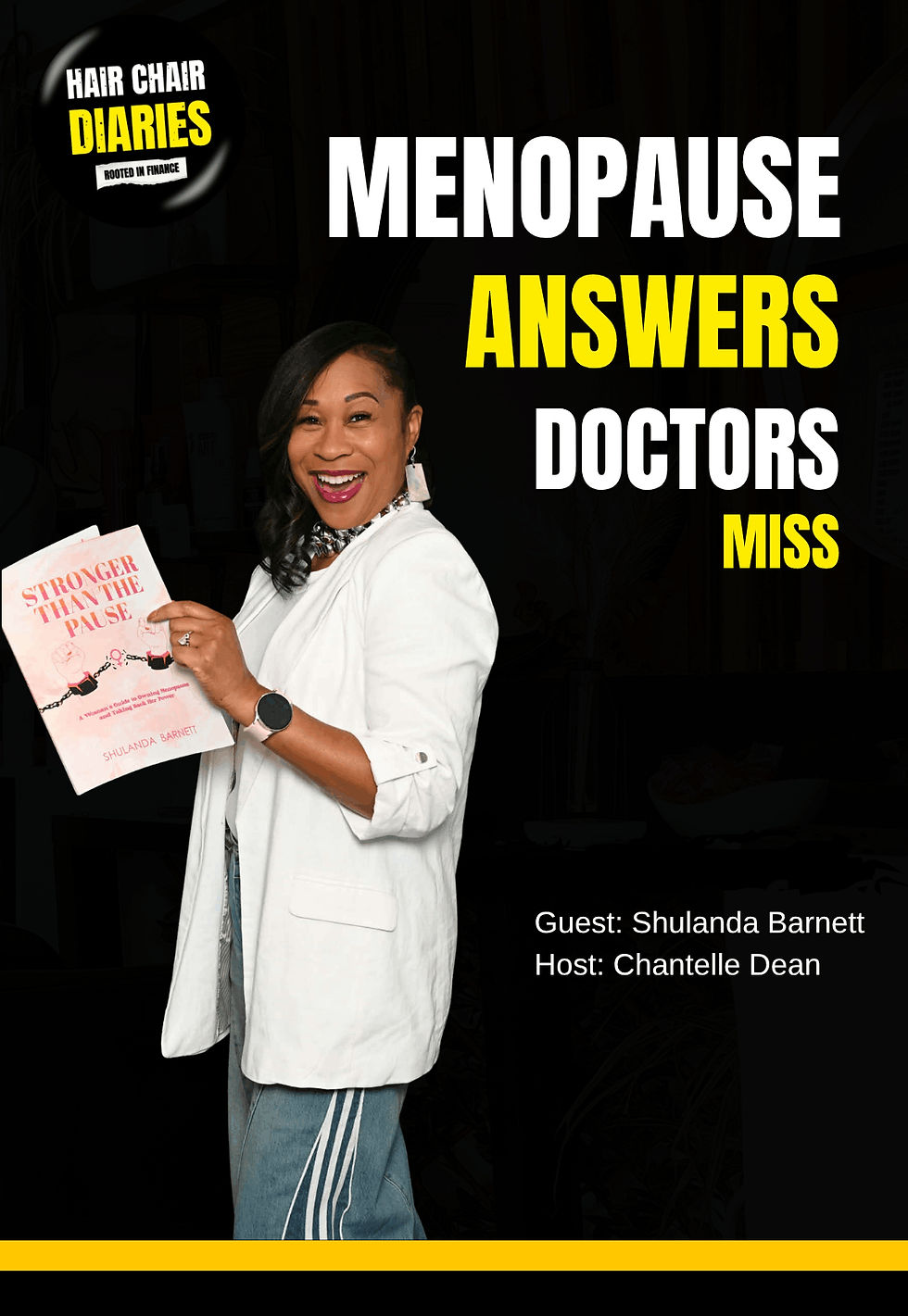
Then came my conversation with Shulanda Barnett, and that gave the educational side of the same conversation.
Shulanda is a menopause wellness specialist, has been in health and fitness for almost 20 years, is a kinesiology professor, author of Stronger Than the Pause, and founder of Peri Advocate, an app designed to help women track symptoms and create reports they can take to healthcare providers.
What I loved about Shulanda’s story is that even with all her experience in health and fitness, she still had to fight to understand what was happening to her body.
Health & Fitness Expert Quest For Answers
She spoke about being fit, teaching classes, knowing her body, and then realising something was changing. She was working out but feeling fatigued, her belly was changing, she was gaining weight, and her mental health was being affected.
That matters.
Because if a woman who has spent years in health and fitness can still feel confused and dismissed, what hope does the average woman have when she is tired, overwhelmed and trying to get through the day?
Shulanda described going to doctors, having blood work done and discovering things like high cholesterol, high A1C, low vitamin D, low iron and later osteoporosis and osteopenia.
That is where the conversation becomes much bigger than hot flushes.
Menopause and perimenopause are not just about feeling hot. They are not just about periods stopping. They are not just about mood swings.
They can affect how a woman feels in her body, how she thinks, how she sleeps, how she works, how she earns, how she relates, how she sees herself and how safe she feels in her own life.
"Don't Thug It Out"

Shulanda also spoke about the importance of women not simply “thugging it out”, as she put it. She talked about needing to pay attention to what is happening in the body because hormones can affect the brain, bones, heart and wider health.
And then there is work.
Carrie said many women end up leaving work because of menopause, because they don’t feel understood, supported or even fully aware of what is happening to them. She also made the point that employers can lose highly skilled, knowledgeable women because the right support is not in place.
That is the financial thread.
Because if a woman’s symptoms affect her confidence, concentration, sleep, memory, energy and ability to work, then this becomes a money conversation too.
It affects income. It affects career choices. It affects business decisions. It affects protection needs. It affects confidence around asking for support. It affects whether women stay, leave, reduce hours, change direction or quietly fall apart behind closed doors.
Hair Chair Diaries | Rooted In Finance | Menopause Tax
Because finance is not just numbers on a spreadsheet. It is rooted in everything we live through.
A hormone conversation can become a work conversation, a work conversation can become an income conversation. And income conversation can become a confidence conversation. And a confidence conversation can become the moment a woman realises she is not broken, she is under-informed and unsupported.
Both Carrie and Shulanda came back to the same truth in different ways.
Women need education, language, to understand their bodies, to be able to walk into appointments with more confidence. That means knowing what questions to ask.
If you feel like you are failing when actually its just your bodies changing, you should know there's no need to suffering alone.
The chair was never just about hair.
It was always where women sat down and said the thing they had been holding in.
This month, the thing we are saying out loud is this:
Menopause is not a side issue. Perimenopause is not just something to “get through”. Hormones are not just women being emotional, and the cost of not educating women properly is far too high.
We deserve better conversations before we reach crisis point.
This blog is based on personal conversations shared on Hair Chair Diaries. It is for general information and lived experience only and is not medical advice. Please speak to a qualified healthcare professional before making decisions about HRT, medication, testing or treatment.
Hair Chair Diaries may include general conversations around money, protection, work, income and life planning. This content is for general information and education only and is not personal financial advice. Where regulated mortgage or protection advice is needed, this is provided separately through PD Finance Ltd, where appropriate.
Watch Carrie's Interview
Watch Shulanda's Interview
Comments